Ever wish your Bothell home could help pay its own mortgage? House hacking can make that happen. Whether you build an accessory dwelling unit (ADU) or buy a duplex and live in one side, you can offset costs and build equity over time. You want a clear, local roadmap that helps you compare both paths without surprises. This guide walks you through Bothell-specific considerations, financing, timelines, and a simple framework to test the numbers. Let’s dive in.
Bothell context that shapes your plan
Bothell sits at the crossroads of King and Snohomish counties. Some addresses pull records, taxes, or permits from one county, others from the city. Always confirm which county your parcel is in before you run numbers or pull permits.
Demand for rentals is supported by proximity to major job centers in Seattle, Bellevue, and Redmond. That can help stabilize rent potential, but prices, interest rates, and inventory still drive cash flow. Pull current local comps and market data when you evaluate a property.
Rents vary widely by neighborhood, unit size, and condition. For a realistic estimate, compare recent Bothell listings with similar bedroom counts and amenities, and talk with a local property manager. Account for seasonality and plan conservatively.
Path 1: Build or convert an ADU
What an ADU is
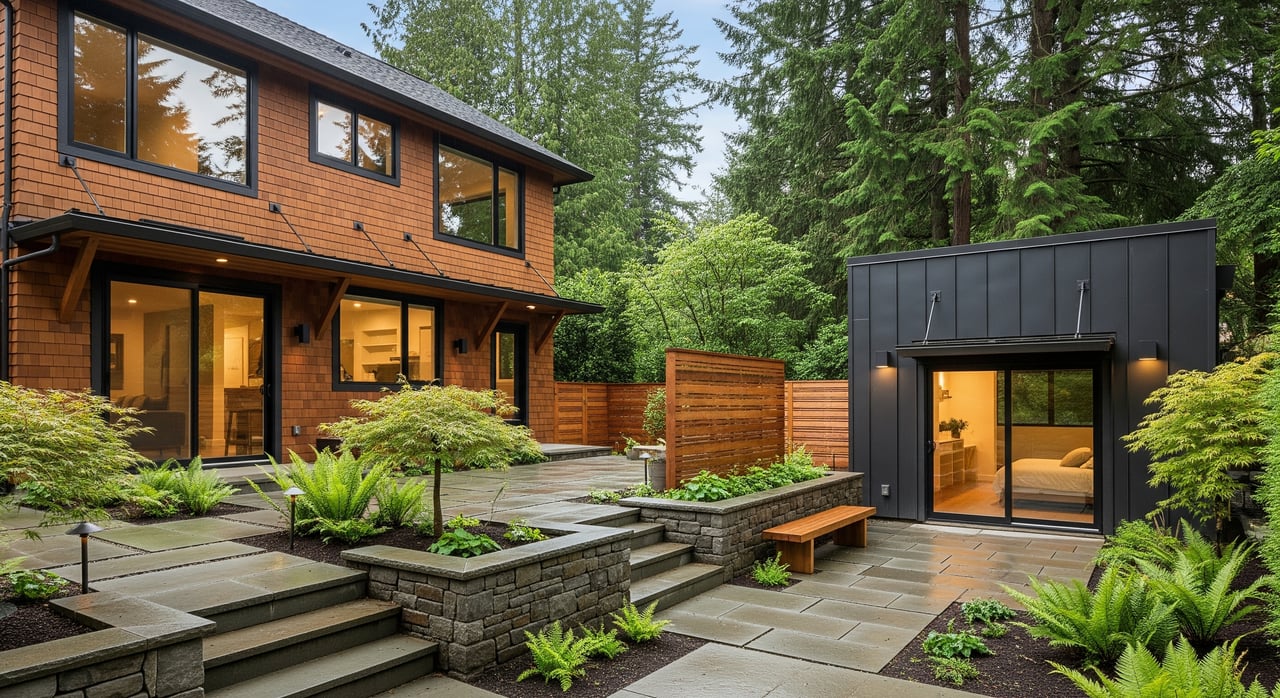
An accessory dwelling unit is a secondary home on a single-family lot. It can be an attached suite, a basement or garage conversion, or a detached cottage. You can live in the main home and rent the ADU, or live in the ADU and rent the main home.
Check local rules first
Before you sketch plans, confirm the property’s rules with the City of Bothell Planning and Development Services and, if applicable, King or Snohomish County:
- Zoning: Verify ADUs are allowed for your zoning designation.
- Owner occupancy: Some jurisdictions require an owner to live on site. Confirm Bothell’s current policy.
- Size and placement: Check unit size limits, setbacks, height, lot coverage, and how many ADUs are allowed.
- Parking: Verify whether on-site parking is required or can be waived.
- Utilities: Ask about separate meters, connection capacity, and fees.
- Fees and timelines: Review permit and impact fees and estimated review time.
- Short-term rentals: Confirm whether short-term use is permitted and if licensing is required.
Permits and timelines
Interior conversions, like a basement or garage, are often faster. New attached additions or detached cottages take longer due to site planning, engineering, and utility work. In the Puget Sound region, permit review can take weeks to several months, and construction ranges from a few months for simple conversions to 6–12 months or more for detached builds. Your timeline depends on design complexity, site conditions, and the completeness of your submittal.
Costs and key drivers
ADU costs in the Seattle metro tend to run higher than national averages. Interior conversions can land in the lower range, while new detached units often reach the mid to upper six-figure range depending on size and finishes. Major cost drivers include structural work, foundations, utility extensions, sewer and water connections, parking and site work, and design and permit fees. Get bids from local contractors familiar with Bothell codes before you commit.
Design and operations tips
- Separate utilities simplify billing, but add upfront cost and may need utility approval.
- Meet fire separation and egress requirements for safe, legal occupancy.
- Plan for sound insulation and clear pathways to improve privacy for both households.
- Consider accessibility features if your target renter segment values step-free access.
- Decide whether you will self-manage or hire a property manager, and budget management fees accordingly.
Estimate rent for your ADU
Compare recent local listings for similar ADU or small-unit rentals. Adjust for bedroom count, square footage, parking, private entries, and laundry. Use a vacancy allowance in your pro forma, often 5–10 percent depending on market conditions. If you plan to include utilities, estimate the cost so you can set rent accordingly.
First steps to start an ADU project
- Verify zoning and ADU allowances with City of Bothell Planning.
- Order a site feasibility consult with a local architect or design-build firm.
- Gather preliminary cost estimates and a permit timeline.
- Review financing options, including renovation or construction loans.
- Draft a basic pro forma to test rent, vacancy, and expenses against your payment.
Common ADU pitfalls
- Lot size, setbacks, or critical areas that restrict buildable space.
- Streets without sewer access or limited utility capacity that trigger upgrades.
- HOA covenants that limit secondary units.
- Underestimating soft costs, utility fees, or schedule delays.
Path 2: Buy a duplex and live in one unit
Why a duplex can pencil
A duplex gives you two purpose-built units under one roof. That often means better separation, separate systems, and simpler tenant billing. Resale appeal can be strong since future buyers may be investors or house hackers who value a legal two-unit property.
Zoning and legality
Confirm that the property is a legal duplex with two permitted units. If you are considering converting a single-family home into two units, expect meaningful permitting and code upgrades. Separate egress, electrical capacity, plumbing, and life-safety improvements can add cost and time.
Duplex due diligence checklist
- Unit legality: Verify permits and legal unit count with city and county records.
- Leases: Review rent amounts, terms, deposits, and notice requirements.
- Physical inspection: Roof, foundation, HVAC, water heaters, electrical capacity, plumbing, moisture, and sound separation.
- Utilities: Check for separate meters and who pays which bills.
- Income and expenses: Calculate Net Operating Income using realistic expenses and a vacancy allowance.
- Parking and demand: Assess on-site parking and neighborhood demand for similar units.
- Maintenance history: Review past capital repairs and plan reserves for big items.
Tenant law, taxes, and insurance
Know your obligations under Washington State landlord-tenant law and any local protections. Insurance for an owner-occupied duplex differs from single-family coverage, so confirm the right policy type and cost. For taxes, speak with a CPA about depreciation on the rental portion and allowable deductions.
Financing options for owner-occupants
Loans for duplexes and small multi-unit
Owner-occupants can use FHA loans to buy 2–4 unit properties with a low down payment if they live in one unit. Eligible veterans can use VA loans on 1–4 units. Conventional loans often require higher down payments for 2–4 units. Confirm current guidelines with your lender.
How lenders view rental income
Some lenders allow a portion of rental income from the second unit to help you qualify, especially if there is a signed lease and supporting documentation. Requirements vary, and many lenders want cash reserves equal to several months of payments. Ask how your lender will treat future rent and what documents they need.
Funding an ADU build
Common options include a cash-out refinance, a home equity line of credit, or a renovation loan. FHA 203(k) and conventional renovation products, such as Fannie Mae’s HomeStyle Renovation, can fund additions that create an ADU if the project meets program rules. Detached ADUs may require a construction loan that converts to permanent financing once complete. Some cities and nonprofits offer incentives or fee reductions for ADUs, so check current local programs.
Tips for lender shopping
- Compare at least three lenders, including a community lender or credit union.
- Ask whether they will count ADU or duplex rent in qualifying and what proof they need.
- Confirm if separate utility meters are required to count rent.
- Get clear timelines for appraisal, renovation draws, and final inspections.
Run the numbers with a simple framework
Use conservative inputs and stress test your assumptions. Here are core metrics and how to apply them:
- Gross Potential Rent (GPR) = sum of market rents for all units.
- Effective Gross Income (EGI) = GPR minus vacancy and concessions, plus other income.
- Net Operating Income (NOI) = EGI minus operating expenses, excluding loan payments.
- Monthly Cash Flow = NOI divided by 12, minus your monthly mortgage payment.
- Cap Rate = NOI divided by purchase price.
- Gross Rent Multiplier (GRM) = purchase price divided by GPR.
- Debt Service Coverage Ratio (DSCR) = NOI divided by annual debt service.
Build a quick pro forma with:
- Rents for each unit and a vacancy allowance.
- Taxes, insurance, utilities you will pay, maintenance, management, HOA if any, and reserves for capital items.
- Your loan terms and total monthly debt service.
Then ask a few “what if” questions:
- What happens if rent is 5–10 percent below my projection?
- If vacancy is two months for one unit this year, what does cash flow look like?
- How would a 1–2 percent rate increase affect payments if I refinance later?
ADU vs duplex: which path fits you
Every situation is different, but these lenses can help you choose:
- Speed to income: A duplex can produce rent on day one if a unit is vacant or leases are near term. An ADU requires design, permits, and construction.
- Control and customization: An ADU lets you tailor the space to your needs and future tenant profile. A duplex offers less customization but more immediate function.
- Cash flow potential: Two full-size duplex units often yield stronger gross rent than a single-family with one ADU, but location and layout matter.
- Capital and risk: ADU projects bring construction risk and soft costs. Duplex purchases concentrate risk at acquisition and inspection.
- Resale flexibility: A legal duplex appeals to investors and house hackers. A home with a well-executed ADU can attract both traditional buyers and live-in landlords.
Due diligence checklist for Bothell
Use this quick list for either path:
- Confirm parcel’s county and zoning, and verify ADU or duplex legality.
- Check setbacks, lot coverage, utilities, and any critical-area constraints.
- Review permit requirements, fees, and timelines with City of Bothell.
- Obtain at least two licensed contractor bids for ADU work or duplex repairs.
- Commission a thorough inspection, including structure, roof, mechanicals, pests, and moisture.
- For duplexes, collect leases, rent rolls, deposits, and tenant notices.
- Get insurance quotes tailored to owner-occupied rental use.
- Secure financing pre-approval that matches your strategy, including renovation funds if needed.
- Build a conservative pro forma and stress test your assumptions.
Bring in local help
House hacking is achievable with a clear plan and the right team. You want accurate rent comps, a lender who understands ADUs and multi-unit loans, and a broker who can spot red flags in Bothell’s mixed city-county landscape. If you are weighing an ADU versus a duplex, we can help you model the numbers, align inspectors and contractors, and target properties that fit your goals.
Ready to explore your options in Bothell and the North Eastside? Connect with FIRST AND MAIN to map your best path and move forward with confidence.
FAQs
What is house hacking with an ADU in Bothell?
- You live in the primary home or the ADU and rent the other unit to offset your mortgage, after confirming ADU allowances and permits with the City of Bothell.
How long does an ADU build typically take in the Seattle area?
- Permit review can run weeks to several months, and construction can range from a few months for simple conversions to 6–12 months or more for detached builds.
Can I use FHA or VA to buy a duplex in Bothell?
- FHA can finance 2–4 units with low down payment if you live in one unit, and eligible veterans can use VA for 1–4 units, subject to current program rules and lender guidelines.
Will lenders count rental income from the second unit when I qualify?
- Many lenders will count a portion of documented rental income, often with a signed lease and supporting proof, but policies vary and reserves may be required.
What costs do buyers often miss with ADUs or duplexes?
- Utility connection fees, permit and impact fees, sound insulation, separate meters, vacancy, maintenance, insurance adjustments, and reserves for big-ticket repairs.
Are short-term rentals allowed for ADUs in Bothell?
- Rules change, so confirm Bothell’s current short-term rental regulations and any licensing requirements before planning nightly or weekly rentals.