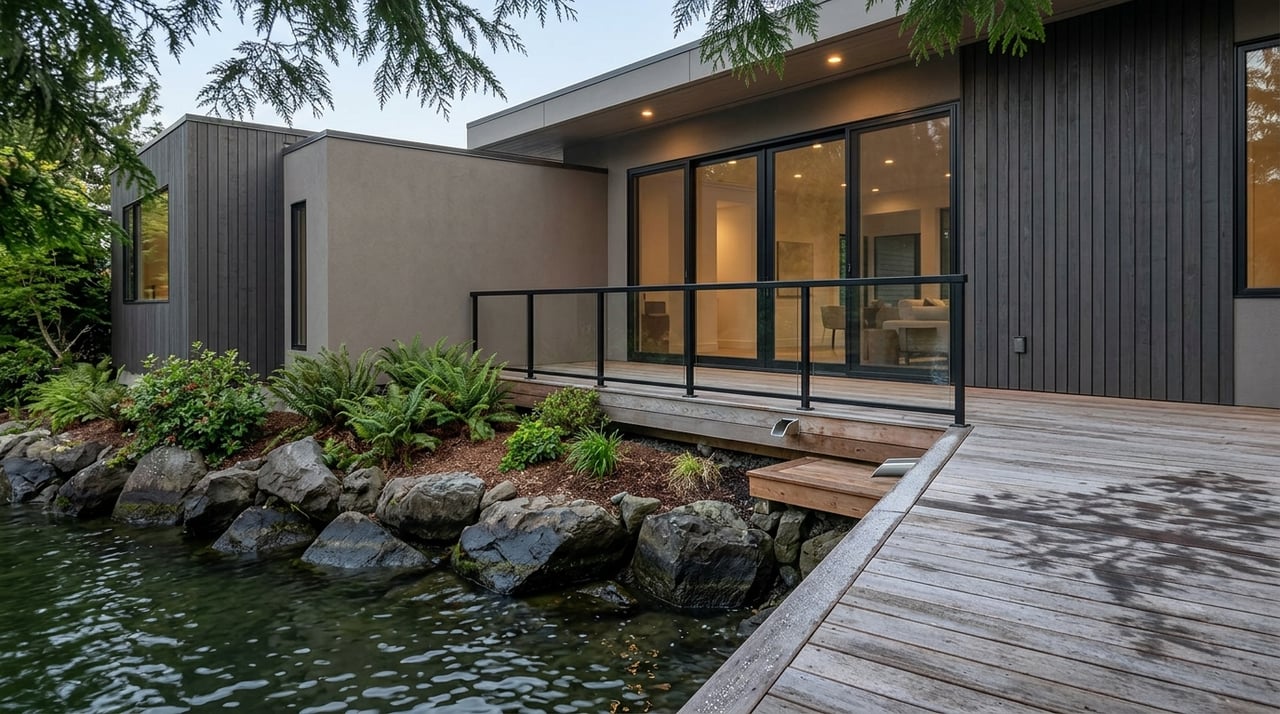
Dreaming about waking up to water views and stepping straight onto your dock? Lakefront living in Lake Stevens can be a beautiful lifestyle move, but it comes with more rules, costs, and due diligence than many buyers expect. If you are thinking about buying on or near the water, this guide will help you understand the trade-offs, the permitting realities, and the questions worth asking before you write an offer. Let’s dive in.
Why Lake Stevens Waterfront Homes Stand Out
Lake Stevens is the largest natural lake in Snohomish County, covering more than 1,000 acres and reaching a maximum depth of 150 feet, according to the City of Lake Stevens lake management information. That size, paired with limited shoreline inventory, helps explain why true waterfront homes often command strong demand.
In most markets, waterfront property carries a scarcity premium. While the exact premium in Lake Stevens depends on current comparable sales, broader waterfront housing research from Knight Frank found that water-facing homes were 48% more expensive on average than comparable non-waterfront homes in Q2 2023. For you as a buyer, that means the view and access can be valuable, but so is understanding exactly what you are paying for.
What Counts as Waterfront in Lake Stevens
Not every home near the lake offers the same ownership experience. In Lake Stevens, true shoreline properties are generally single-family homes, and the city’s shoreline rules are designed around that pattern of development, as outlined in the Lake Stevens Shoreline Master Program.
Some older homes may be legally nonconforming, which means they were built before current setback or dimensional standards took effect. That does not automatically make them a problem, but it does mean you should verify what changes were permitted in the past and what changes may be limited in the future.
Shoreline Rules Buyers Need to Know
If a property falls within shoreline jurisdiction, future projects usually need to comply with the city’s Shoreline Master Program. The city notes that work may involve shoreline substantial development permits, conditional use permits, variances, or exemptions, and even exempt work still needs city review to confirm that the exemption applies, according to the Lake Stevens SMP User Guide.
That matters because many buyers assume they can update a dock, shoreline edge, or lakeside structure later without much process. In reality, shoreline ownership often means extra review, added timeline, and more documentation.
Expect Review for Many Improvements
The shoreline master program applies not only to the water itself, but also to shorelands within 200 feet of the ordinary high-water mark, according to the city’s lake management page. If you hope to remodel, expand, or improve a waterfront home, that jurisdiction can shape what is possible.
For older shoreline homes, the rules can be especially important. The city’s SMP user guide says legally established structures that do not meet current standards may be enlarged or expanded only if the nonconformity is not increased. In plain terms, a home’s existing footprint or placement near the water may limit your future plans.
Docks Can Be More Complex Than Buyers Expect
Dock work is one of the biggest surprises in waterfront transactions. According to the City of Lake Stevens dock checklist, a new dock valued over $10,000 can trigger shoreline substantial development review, SEPA, a floodplain development permit, hydraulic project approval, and a building permit.
Even when a project may qualify for an exemption, it still requires review. The city also notes that replacing decking or planks may not require a building permit, but it still requires a land-use permit. If you are buying a home because you plan to rework the dock right away, it is smart to confirm both cost and approval path before closing.
Dock Design Has Specific Limits
Lake Stevens also regulates the size and placement of docks and piers. The shoreline master program says docks and similar structures should generally be at least 10 feet from side property lines, with a possible 5-foot exception when 10 feet is not feasible.
For single-family residences, the city allows one pier or dock. The program also calls for minimal sizing and open decking standards in many cases. That means your lot width and shoreline conditions may affect what kind of dock setup is realistic.
Bulkheads, Buoys, and Boat Lifts Also Matter
Over-water and in-water improvements are not just cosmetic features. The city treats docks, bulkheads, and watercraft lifts as part of the regulatory floodplain, and they require a floodplain development permit, according to the SMP user guide.
Bulkhead work can be especially sensitive. Repairs cannot be used to create more dry land, and changes that materially alter the structure may be treated as new shoreline stabilization. If a property has an older bulkhead, you will want to understand its condition and whether future work could become more involved than expected.
Buoys and markers are regulated too. Under the city’s water recreation policy, it is unlawful to place a buoy or marker in Lake Stevens without a permit. If a boat lift is part of your plan, the dock checklist notes that an electrical permit may also be needed.
Waterfront Lifestyle vs Lake Access Lifestyle
For some buyers, direct waterfront is the dream. You get immediate access to boating, swimming, fishing, and the visual calm that comes with living on the lake. If that daily connection to the water is your top priority, the premium and extra responsibilities may feel well worth it.
But direct waterfront is not the only way to enjoy Lake Stevens. The city offers two public boat launches, North Cove and Davies Beach, both with two-lane facilities and ADA-accessible docks. Sunset Beach Park also offers lake access, a swim area, and a fishing and swim dock.
Nearby Homes Can Offer More Simplicity
A lake-view or nearby non-waterfront home can still deliver a strong Lake Stevens lifestyle without the same shoreline permit obligations. That can be appealing if you want access to recreation but do not want to take on dock maintenance, shoreline review, or floodplain-related improvements.
There is also an important rule to know: the city’s shoreline program prohibits houseboats, live-aboards, and other residential uses over water. If your vision includes a highly customized over-water lifestyle, Lake Stevens may not support that use.
Everyday Lake Use Has Seasonal Rhythms
Lake living here changes with the seasons. The city raises the lake level in spring and summer for recreation, then lowers it in fall to create storage for wet-season rainfall, according to the Lake Stevens lake management page.
Fishing is available year-round. The lake supports kokanee, rainbow trout, largemouth bass, smallmouth bass, yellow perch, brown bullhead, and cutthroat trout, with kokanee fishing especially strong from about May through August, based on the same city source.
Boating Rules Shape Daily Life
The day-to-day boating experience also comes with local rules. The city’s water recreation program says traffic on the lake runs counter-clockwise, and there is a no-wake or 8 mph speed limit within 100 feet of swimming areas, structures, or floating objects.
Those rules help protect safety and shoreline conditions, but they are also part of what you are buying into. If you picture fast, unrestricted boating right off your dock, it helps to understand how local operations actually work.
Financing and Flood Risk Questions to Ask Early
Waterfront financing can be more nuanced than standard suburban home financing. FEMA defines a Special Flood Hazard Area as the 1% annual-chance flood area, and federally regulated or government-backed lenders require flood insurance for buildings in an SFHA.
That does not mean every lakefront home will face the same insurance requirement, but it does mean you should check flood maps early in your search. This is especially important if the property includes shoreline, a dock, bulkhead work, or other over-water features.
Septic, Water Quality, and Long-Term Value
If the property uses an on-site sewage system, due diligence is especially important. The Washington State Department of Health says property-transfer inspections for on-site sewage systems become a statewide requirement starting February 1, 2027, and Snohomish County Health Department is preparing local procedures.
Even before that deadline, you should ask about inspection records, pumping history, and system condition. For waterfront homes, septic performance is not just a maintenance issue. It is tied to environmental stewardship and can affect long-term property value.
A large national lakefront property study found that better water clarity was reflected in higher sales prices near lakes. For Lake Stevens buyers, that is a reminder that runoff control, septic care, and shoreline stewardship matter both personally and financially.
Local Stewardship Supports the Lake
Lake Stevens is actively managed to reduce phosphorus and algae issues through stormwater maintenance, annual alum treatments, and public outreach, according to the city’s lake management page. Snohomish County’s LakeWise program also encourages native shoreline planting, reduced fertilizer use, and septic care.
For shoreline owners, that is worth seeing as part of ownership rather than a side note. Protecting lake health supports recreation, quality of life, and the long-term appeal of waterfront property.
Smart Questions to Ask Before You Buy
Before you move forward on a Lake Stevens waterfront home, it helps to get specific answers to a few key questions:
- Is the home within shoreline jurisdiction?
- Are the dock, bulkhead, lift, or buoy fully permitted?
- Has any past addition or shoreline work been approved by the city?
- Is the property in a Special Flood Hazard Area?
- Does the home use septic, and if so, what do the records show?
- Are there legal nonconformities that could limit future remodeling?
- If you are not buying direct waterfront, how important is nearby public lake access to your lifestyle?
The right waterfront purchase is not just about the view. It is about understanding the property’s legal setup, physical condition, and long-term ownership demands.
If you are weighing direct waterfront against lake-view or nearby homes in Lake Stevens, local guidance can make the process much clearer. The team at FIRST AND MAIN can help you evaluate the trade-offs, ask sharper due diligence questions, and find the property that fits the way you actually want to live.
FAQs
What should buyers know about permits for Lake Stevens waterfront homes?
- Waterfront improvements in Lake Stevens may require shoreline review, and even exempt work often still needs city confirmation before you move forward.
What should buyers know about docks on Lake Stevens properties?
- New docks, repairs, replacements, boat lifts, and even some decking updates can trigger permits or city review, so you should verify approvals and project limits early.
What should buyers know about flood insurance for Lake Stevens lakefront homes?
- If a building is located in a FEMA Special Flood Hazard Area, federally regulated or government-backed lenders require flood insurance.
What should buyers know about septic systems for Lake Stevens waterfront properties?
- If a home uses septic, you should review system records, pumping history, and condition because statewide property-transfer inspection requirements begin February 1, 2027.
What should buyers know about living near Lake Stevens without owning waterfront?
- A nearby or lake-view home can still offer access to boating, swimming, and fishing through public launches and parks, often with fewer shoreline-related obligations.